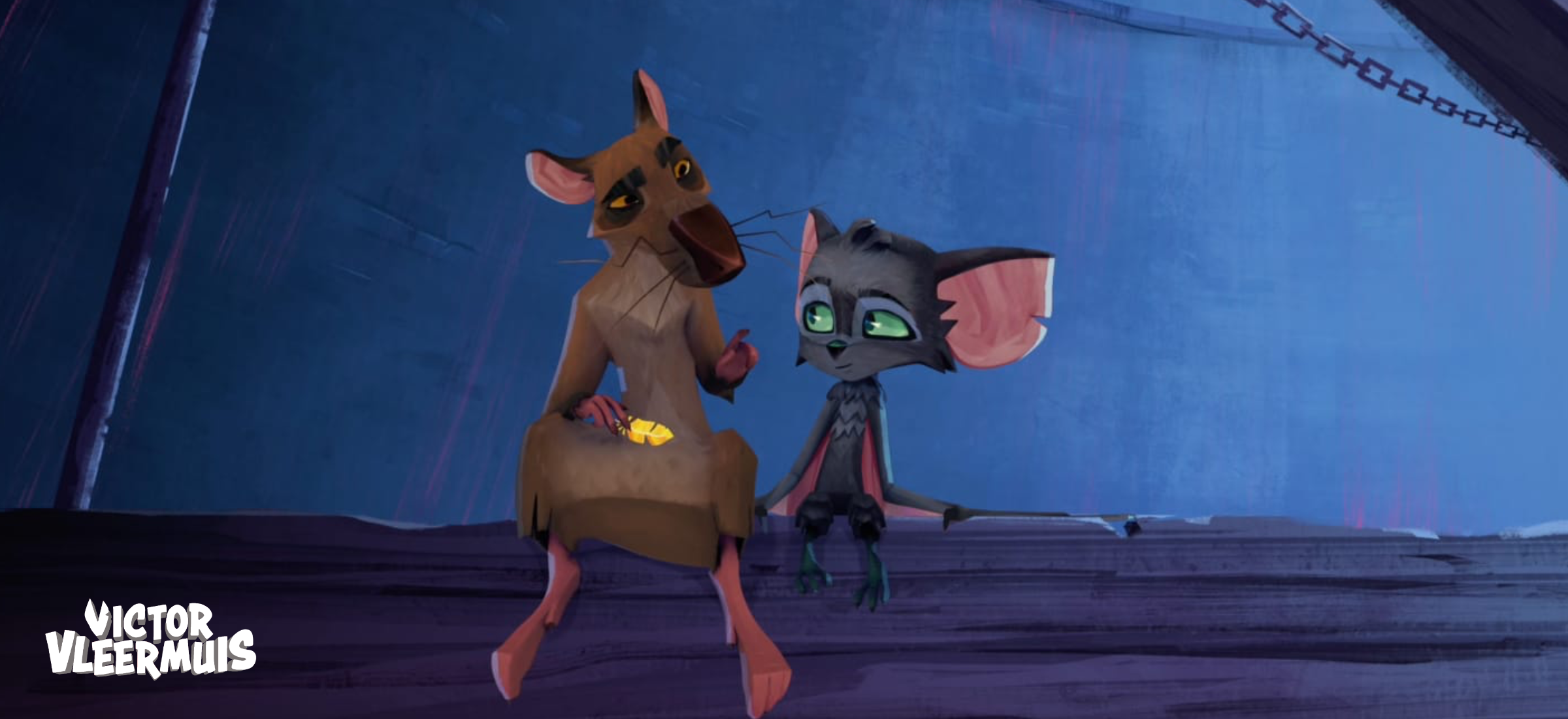
Stop-motion animation has always been a part of Dutch Director Patrick Raats’ life. And even as he embarked on his latest directorial journey with the CGI animated feature Benjamin Bat, stop-motion wasn’t that far away.
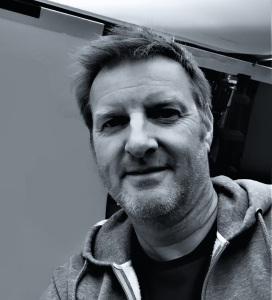
Looking back, Raats’ career spans from shorts to features and TV series, from children’s films to more adult ones, with a deep connection to animation as both craft and art. And as his stance on the medium evolved with the tides of the industry, Raats remains amazed by how animation is still kind of magic, even after thirty years.
How did you start your animation journey?
My first memory was the TV series The Adventures of Colargol Bear (1967-74). This character, created by Olga Pouchine in 1960, was a children’s series in stop-motion that was very popular in the Netherlands. I remember a very specific detail about this Polish TV series : they made water by using cling film. I found that so fascinating…
I was always making things as a child: drawing, creating dolls, dioramas, scale models, my own board games. Still, I decided to study economics. But thanks to my parents, who asked me after a year of studying if I wouldn’t be better off doing something I was truly passionate about, I went to study graphic design and started making clay animations at the same time.
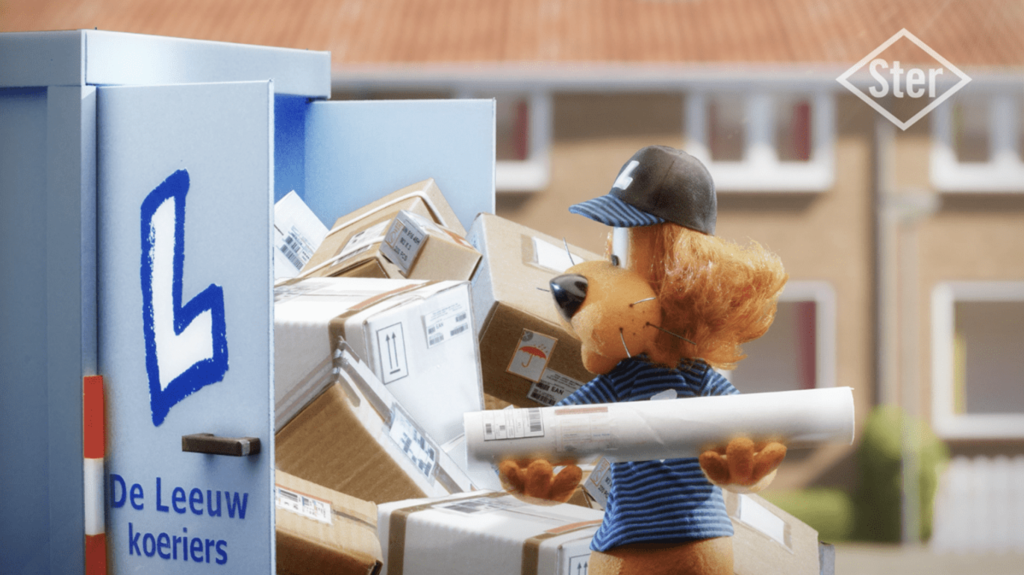
I joined the film industry through a job at a lighting equipment rental company, where I worked as a gaffer on live action commercials. During that time, I met a producer who introduced me to Toonder Studios, the most well-known animation studio in the Netherlands. There, I got the opportunity to work on Loeki de Leeuw production, the country’s most famous stop-motion character. When I first arrived at the studio in 1990, everything fell into place. This was what I wanted to do.
Since then you have worked with multiple techniques, how did it feel to move from one to another?
In my early years, I worked as a stop-motion animator myself, but gradually I started directing more and more. That felt very natural. As a director, I tell stories. The technique is secondary to that—though I’m definitely a stop-motion enthusiast. On the projects I direct, I always work with a strong team of specialists in the various departments. I always try to have a special vision for a project and communicate clearly about this with the crew, and to give them the trust and freedom to contribute their own ideas. That often pays off in great results. Sometimes it’s different from what I had in mind—but if it works for the project, it’s the right choice.
Stop motion has always remained a part of my artistic vision. For example, in my most recent feature film Benjamin Bat, which was animated in CGI, we animated on twos in order to create a less polished CGI feel—something that evokes a sense of handcrafted movement. This is quite common in stop-motion, but less so in computer animation.
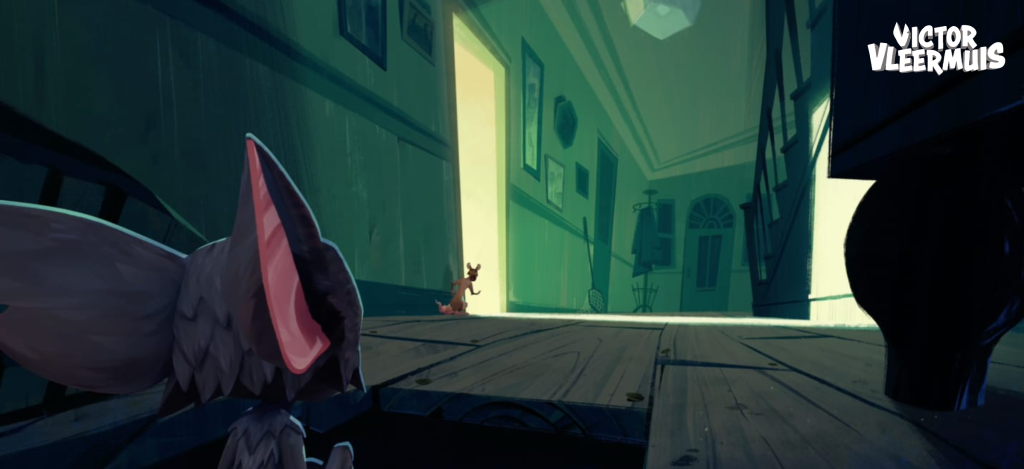
Another part of my vision is to direct character performances through choreography within the frame, rather than relying heavily on cutting between different shots. For instance, a character might step forward in a wider shot to draw focus—giving them the emphasis I want as a director—without needing to cut to a close-up. In this way, I aim to create a natural visual flow that guides the viewer’s eye intuitively.
Benjamin Bat is your latest directorial feature experience, how did you come upon this project?
The idea for this film came from producer Errol Nayci and screenwriter Karen van Holst Pellekaan. Neither of them had any prior experience with animation, so they brought in animation producer il Luster Productions. Since I had worked with them on many previous projects, they introduced me to the team after a few conversations about my vision for the film, they were convinced that I was the right director for the project.
The film is about a small bat who’s afraid of the dark, loves to sing, and falls in love with a tropical songbird. His father and brothers find this very strange. For me and animation producer il Luster, it was clear that the main character’s sense of being different should also be reflected in the film’s visual style. Instead of sleek rounded computer-generated characters, we designed them with more angular shapes and hand-painted textures.
The biggest challenge was integrating the CGI-animated characters into the 2D hand-painted backgrounds, and applying hand-painted textures to the characters themselves, without them disappearing into the backgrounds. But beyond the creative choice to opt for a less conventional look for the film, the 2D backgrounds also offered more cinematographic advantages. They allowed us to experiment with more extreme perspectives quite easily, without having to build the backgrounds in 3D each time. Our goal was always to create a believable world, not a realistic one.
I’m very pleased with the final result. So much so, in fact, that I’m now developing my own script for an art house feature film, which I would love to realise using this technique. And in that project, I would like to push the boundaries of creative possibilities even further.
How has the audience responded to the film so far?
The reactions to the film have been heartwarming, with great reviews. Unfortunately, the cinema attendance in the Netherlands was disappointing. For a film that isn’t based on a well-known IP, it’s a challenge to make it out there. It always has been, and even more so nowadays.
On the festival circuit, however, it’s doing well, with screenings all over the world—from Poland to Indonesia, and soon in Australia. I recently went to Stockholm for the Swedish premiere of the film. The theater was full of enthusiastic children, followed by a long Q&A. They kept asking questions, which was a joy to experience. That’s what I make films for.
How do you feel animation has evolved in the Netherlands since the beginning of your career?
It has changed a lot—both in positive and negative ways, I think. On the positive side, there are now many excellent opportunities for education. I’ve had the chance to teach for several years at the ArtEZ University of the Arts in the Netherlands. I see that as a great opportunity to experiment and explore, with space for mistakes.
On the negative side, there have been widespread budget cuts in recent years. Broadcasters for TV series and funds for independent, artistic films are under a lot of pressure. But overall, tremendous progress has been made. I’ve had the opportunity to direct many series and two feature films. When I first started in animation, no feature films were being made in the Netherlands. Nowadays, nearly every year a new film is released—mostly aimed at children. I’d love to make a feature film for a more adult audience myself. But that requires a lot of perseverance.
While you worked on several family films & series, you also collaborated on Nayola, an adult animation co-production. How was your experience on this project?
Working on Nayola — a raw, emotional story of three generations of women during the Angolan civil war—was an incredible experience. It was such a beautiful project, featuring a variety of styles and created across several countries. I had a strong connection with director José Miguel Ribeiro, who also has a background in stop-motion. He was very open to suggestions during the storyboard phase and welcomed animation input for the different characters in an open discussion, while keeping the final decisions. The Portuguese way of working—non-hierarchical and collaborative—aligned closely with the Dutch approach.
It was also very meaningful for me to work on a project aimed at adults, allowing us to show that animation is much more than just a medium for children.
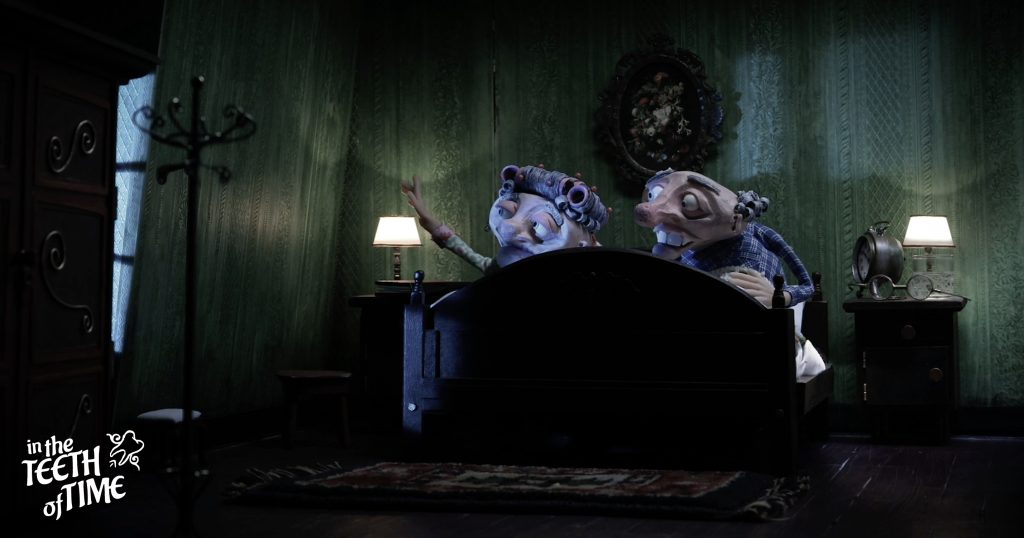
In that same spirit, I’m currently working with Amsterdam-based stop-motion 5 A.M. Studios, on my own short adult stop-motion film: In The Teeth of Time, a dark interpretation of the Tooth Fairy myth.
What is animation to you as a medium, and has that perception evolved during your 30 years of career?
Animation has always been a powerful and versatile medium for me—a form through which you can tell stories in ways that aren’t possible with live-action. It gives you complete freedom to create worlds, characters, and emotions, often in a very pure and poetic way. In that sense, it still feels like a kind of magic.
Over the past 30 years, my view of animation has definitely evolved. In the beginning, I saw it mainly as a craft—something technical that required precision and discipline. But as I gained more experience, I began to appreciate its full artistic power. I now see it as a language in its own right, one that offers space for abstraction and deep emotional expression to tell my stories.
It’s also fascinating to see how the medium has grown worldwide. Animation is no longer just for children, and more and more people are beginning to recognize its artistic and narrative value. I hope to keep pushing those boundaries, especially by telling stories aimed at a more adult audience.