Following the visionary Perfect Blue and the nostalgic Millennium Actress, Kon’s third feature, Tokyo Godfathers, tempers his dreamlike style in favour of a more tangible reality — though without abandoning his symbolic signature entirely. The film immerses itself in a concrete, crowded Tokyo, yet continues to move along that delicate threshold between the possible and the improbable, between urban realism and fairytale tension. It is precisely in this duality — between verisimilitude and miracle — that the film finds its strength.
Loosely inspired by The Three Godfathers (1913) by Peter B. Kyne and, more directly, by its cinematic adaptation by John Ford (3 Godfathers, 1948), the film is based on a screenplay written by Kon together with Keiko Nobumoto (renowned for Cowboy Bebop and Samurai Champloo). Produced by Studio Madhouse, the film features character design by Kenichi Konishi, a long-time collaborator of Studio Ghibli, and an eclectic score by Keiichi Suzuki (composer of Zatoichi, 2003, directed by Takeshi Kitano).
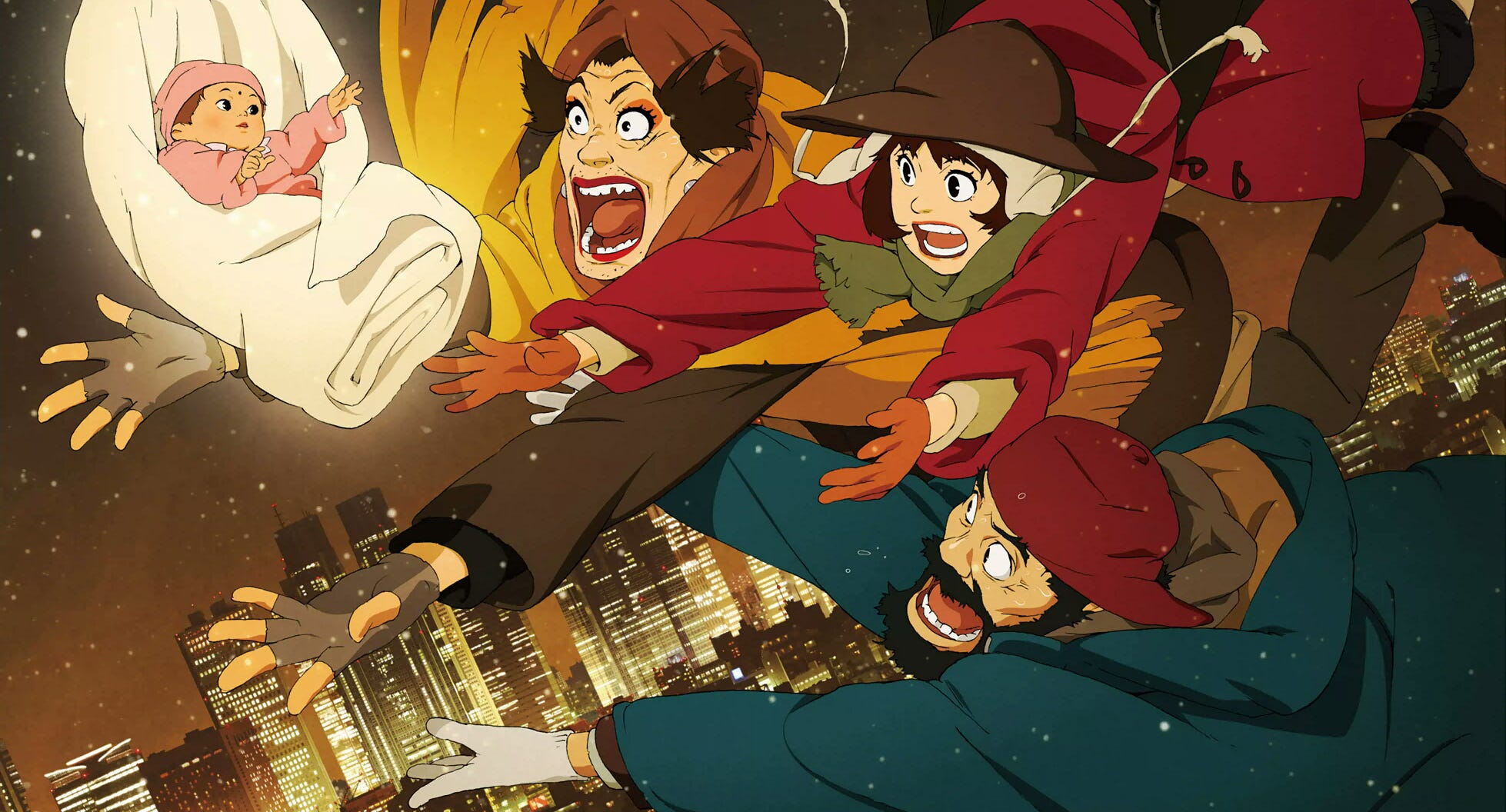
The story begins on Christmas Eve. Amid piles of rubbish and snow-soaked cardboard boxes, three homeless individuals — Gin, a gruff former cyclist with a weary heart; Miyuki, a teenage runaway consumed by guilt; and Hana, a warm-hearted, theatrical former drag queen — stumble upon an abandoned newborn. While Hana welcomes her as a sign of fate, the others respond with scepticism and suggest handing her over to the police. Yet the unexpected bond with the child and a shared sense of responsibility leads them to make an unplanned decision: to search for her biological mother. This journey across the city will become, for each of them, a confrontation with their own past.
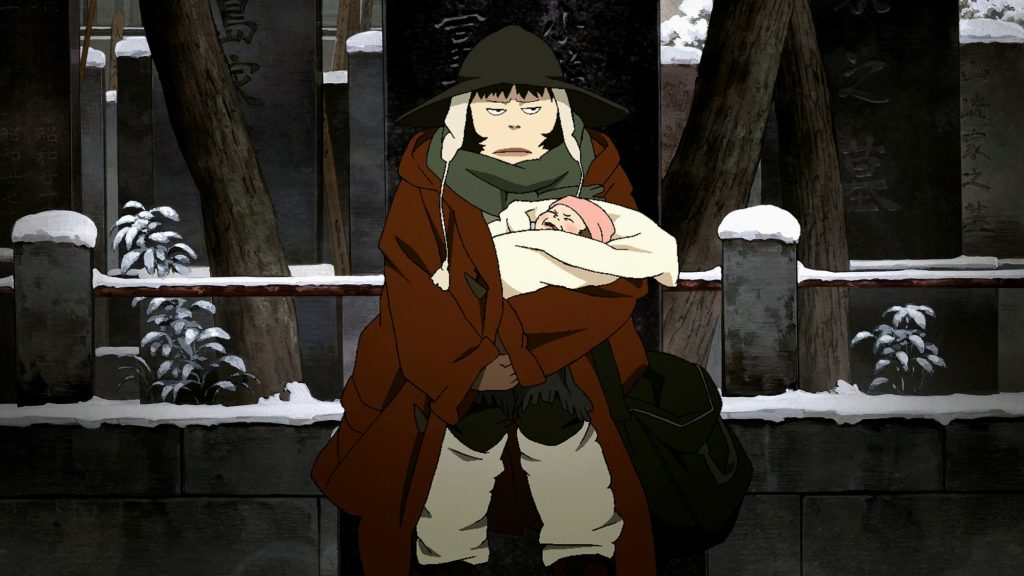
The screenplay builds a web of coincidences that verge on the fairytale, yet Kon handles the suspension of disbelief with great finesse. Fortuitous encounters and unlikely mishaps follow one another seamlessly, serving as tools for reflecting on chance, destiny, invisible connections, and the mysterious workings of human relationships. Tokyo Godfathers is, in a sense, a Christmas comedy — but one stripped of sentimentality. It often makes us laugh and move us in the same moment, in an imperfect world where nothing is easy, yet everything might still be salvaged.
The 2D animation brings to life a Tokyo that feels both overcrowded and intimate, hostile and strangely familiar. The city is at once stage and character, backdrop and antagonist. Snow falls gently on packed buildings and tired faces, heightening the contrast between external cold and the warmth gradually growing among the protagonists. The characters move with expressive realism that makes them vivid and recognisable. Gin is clumsy and irritable, Miyuki restless and impulsive, Hana theatrical, tender, and indomitable: an unlikely trio, rendered with extraordinary humanity.
Thematically, the film addresses marginality without indulgence. These outcasts are not merely victims, but in part architects of their own isolation; and yet a spark of dignity and longing for connection persists within each of them. Among them, Hana stands out as the film’s emotional and symbolic centre. Her maternal yearning, her childlike belief in miracles, and the disarming theatricality with which she faces suffering make her the beating heart of the story. She embodies unconditional love and the aching need for belonging — tempered, crucially, by a self-aware, self-mocking wit.

The finale, set to Beethoven’s Ode to Joy as Tokyo itself quite literally comes alive, breaks the bounds of realism to embrace an overtly symbolic dimension. It feels like something from a dream — and perhaps it is. As in all of Kon’s work, the boundary between reality and illusion remains thin and permeable.
Twenty years after its release, and fifteen since the premature death of its director, Tokyo Godfathers remains a singular work in the landscape of Japanese animation. It may not possess the wonder of the Ghibli masterpieces, nor the visionary intensity of Paprika (Kon’s next film, released in 2006), but perhaps it is precisely in its grounded “normality” that the film resonates most deeply. It offers a different kind of strength: a portrait of Christmas from a sidelong, secular perspective, peopled with those the world would rather forget. And it does so with restraint, irony, and a moving faith in the possibility that even the forgotten, for one night at least, might feel they matter.