Riga has long been home to a distinctive animation tradition, one rooted in artistic experimentation, individual expression, and a strong auteur sensibility.
In recent years, Latvian animation has gained unprecedented international recognition, most notably with Gints Zilbalodis’s Flow (2024), produced by the Riga-based Dream Well Studio, which went on to win the Academy Award for Best Animated Feature in 2025.
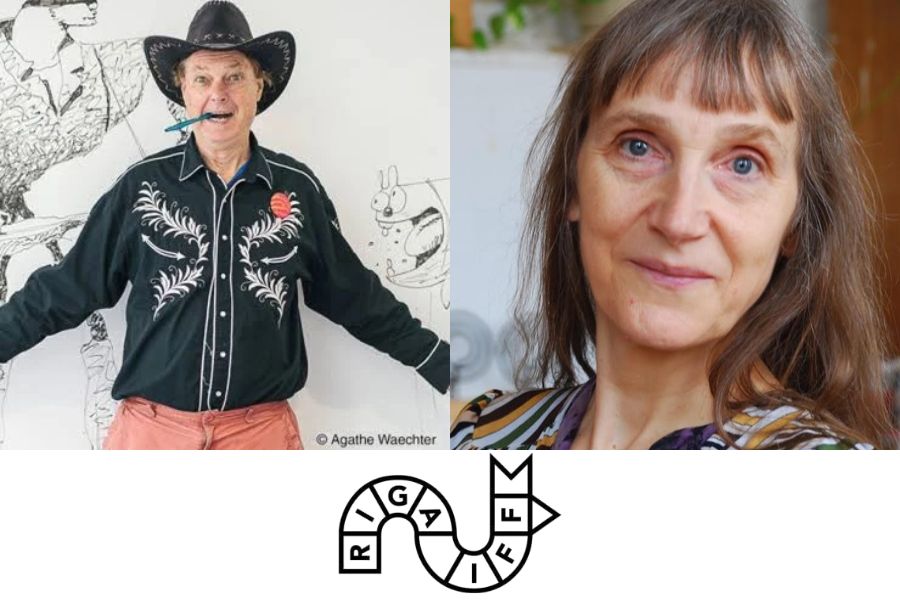
At the Riga International Film Festival, against this backdrop of renewed international attention and a new generation of emerging talent, we met two of independent animation’s most distinctive voices, Bill Plympton and Signe Baumane, who came together in the capital for a masterclass and to meet young Latvian animators.
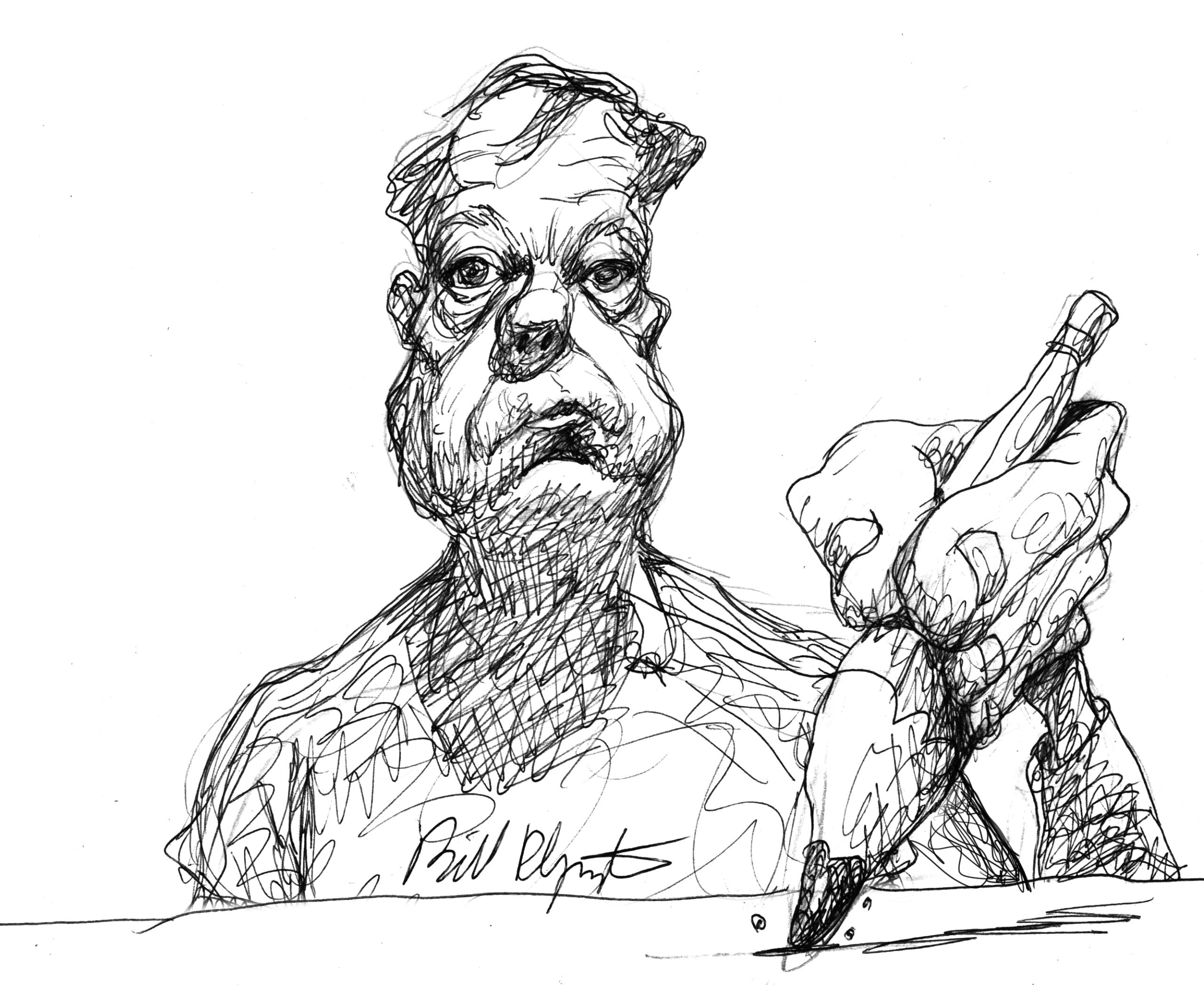
- Plympton, often celebrated as the King of Independent Animation, is renowned for his unmistakable hand-drawn style, surreal humour, and wonderfully twisted imagination.
- Baumane, an acclaimed Latvian-born animator and filmmaker, brings her own bold, intimate, and uncompromising perspective to stories that challenge conventions and explore the human experience.
How did the masterclass here in Riga go?
Plympton: What I thought was really important, and I think the audience liked the concept, is being independent. I don’t take government money or corporate money, or anything like that. I’m self-sustained through my artwork and films. The last few years, because of COVID, I was broke. All the movie theaters were closed, and the film festivals were closed, so I didn’t have any money coming in, but I’ve finally gotten it now. I was selling artwork upstairs, and now I’m back making money again, so that’s good news.
What does being independent mean?
Plympton: There’s no one to tell me what to do. I have 100% complete control. I own the film and the copyright. Those are the two things that I think are important.
These days you’ve been involved with schools and Dream Well Studio. I’ve read that you’re optimistic about their future, and I’d like to know why, beyond the example of Flow. What makes you hopeful?
Baumane: At Bill’s masterclass, most of the audience were young people. Only about a third were animators or wanted to become animators; the rest were interested in film and visual storytelling. We wanted to inspire them to explore animation. For me, young people are the future, and their interest shows that animation is not a dying art. Bill is also an inspiration because he has lived through many crises and difficult times in animation. His example shows young people that you can make films independently, anywhere, with whatever means you have. Even if government support for arts and culture becomes limited, they can remember his message: if you are determined, you can make films on your own.
Flow is another great example. Its director received no support for his first three films and relied on his family before eventually receiving support for Flow, which became the most successful Latvian animated feature film. It shows that if you believe in yourself and keep working despite the hardships, success can come.
But do you want to comment on what you saw in Dream Well Film Studios?
Plympton: It seems like all their artists were very young, right out of school, with a real eagerness and passion for animation. That’s really healthy. I’m seeing the same thing in New York, too. I talk to students at schools like SVA, and they all say, “I just want to make animation. That’s all I want to do.” I think they’re very optimistic.
Baumane: On the surface, young people seem optimistic, but when you dig deeper, many recent graduates have deep anxiety and fear about AI, the collapsing economy, and the lack of interest and support for arts and culture. That’s where people like Bill and I, with our experience, can show them the way. Even if the economy collapses and there is no support or interest, you can still create, make things happen, and bring people together to watch your films.

Nowadays, marketing relies heavily on social media. In the past, it was mostly word of mouth, but now people discover films through Instagram or TikTok clips. Do you think this change has been positive or negative for animation?
Baumane: A long time ago, I worked with Bill Plympton, the famous independent animator from New York, on his film I Married a Strange Person! After we finished, he hired me to hand out postcards on a busy New York street to promote the film screening. I would shout, “Independent animated feature film!” Some people took the postcards, others didn’t. When I promote my films on Facebook today, it feels exactly the same. The principle hasn’t changed: you need striking images or catchy words to grab people’s attention.
What are your thoughts on animation’s timeless quality, and how do you approach it in your own work? What do you think animation has, compared to live-action, that allows it to transcend time and create that sense of timelessness?
Plympton: I like to keep my films timeless. You’ll notice that the cars and clothes often have a 1940s or film noir style. I hope my films will still be watched and loved 40 or 50 years from now. I don’t think people will care when they were made, as long as they have a good story and good drawings.
Baumane: Animation reflects the world in a stylized way, making it timeless through the creator’s personal style, character, and temperament. It also uses symbolic representations, which make it more universal. For example, an animated cow represents more than just one specific cow, and a pig can symbolize greed or laziness.
Animation is a powerful medium that I think is underappreciated, underused, and sometimes even abused. Anything is possible in animation. What appeals to me most is how seamlessly it can move between a character’s inner world, thoughts, and feelings and the external world. In live-action, this can feel artificial or forced, whereas in animation, it happens naturally.
Animation allows you to tell stories in ways that live-action cannot. Yet there’s still a misconception that animation is mainly for children, and that adults only watch it because they take their kids to the cinema. Your films are a great example of how powerful adult animation can be. How do you think we can challenge the prejudice that animation is just for children and help adults recognize the full potential of the medium?
Plympton: I’m disturbed, especially in the US, that animation is still considered a children’s format. It’s frustrating that such a great art form is being denied the opportunity to tell stories for adults. I’m trying to break through that barrier and show that animated films for adults can be entertaining and popular. Ralph Bakshi was a real revolutionary in bringing animation to adult audiences, but even today, it’s still difficult for adult filmmakers to get distribution. I’m trying to change that.
Baumane: I think this prejudice is difficult to fight because powerful, wealthy companies have built a market around the idea that animation is for children. It’s an easy way to explain the medium to mainstream audiences, but it limits opportunities for independent filmmakers who want to make films for adults. I remember when Bill and I programmed an animation festival in Woodstock. We included films that were sometimes violent or sexual, but the festival scheduled the screenings at 11 a.m. Families came with young children, and parents were horrified and rushed out. We told the festival that animation wasn’t necessarily for children, but they thought a warning would be enough. We eventually convinced them to move the screenings to 8 or 9 p.m. Once they did, the shows sold out. The same happens at festivals around the world: when adult animation is screened at the appropriate time, audiences turn up, enjoy themselves, and the screenings are a great success.

What kind of audience do you have in mind when working on a project?
Baumane: I don’t make my films for a specific age group. I make them for open-minded people who want to think and have their perspectives challenged. I want to take audiences on a journey through the way I see the world. For me, entertainment means being transported into another world through a book, story, or film, and coming back to your own world seeing it differently. Tha’s what I aspire to achieve with my films. Bill probably comes from a different place: he wants to entertain people and make them laugh.
Plympton: I just want to make people laugh. I love hearing laughter. You see comedians on TV telling jokes that aren’t meant for children, so I don’t understand why we can’t do the same in animated films. That really frustrates me.
Baumane: It’s difficult to change because we’re competing against a powerful industry. Bill, for example, is competing with multimillion-dollar films while making his own films on super tight budgets, with virtually no marketing. I believe that the more people make animated films for adults, both features and shorts, the more acceptable the medium will become for adult audiences. That’s why I’m hopeful about the future of adult animation. My hope is that we’ll eventually create our own independent ecosystem, separate from Disney and the children’s animation industry, where adult animation can thrive.
TV series have helped audiences understand that animation can be for adults, with shows like BoJack Horseman and Rick and Morty. Perhaps the format makes adult animation more accessible, since people can watch an episode casually at home, whereas watching a feature film requires more time and attention. What are your thoughts on the role of TV series in bringing adult animation to a wider audience? And are any of your upcoming projects exploring this format?
Baumane: I’m glad there are adult animated series, but I also see a problem. Many of these shows are designed for television, with less visual detail and richness because they’re made for smaller screens. Audiences become accustomed to watching adult animation on their couches and don’t see it as something worth going to the cinema for. Going to the cinema is expensive in the US, around $20 a ticket, so people expect a visual spectacle in return. My films are made for the big screen, but when I try to attract audiences, they often think that because it’s animation, they don’t need to see it in a cinema. So, while I’m happy that adult animation is becoming more popular, I worry that these shows are conditioning audiences to see animation as something to watch at home rather than on the big screen.
Plympton: I’m currently working on a feature film called Perv, about a man who is sent to jail because of a misunderstanding involving an itch. After that, I’d like to work on a TV series. It has a very simple, minimalist art style, so it’s not designed for the big screen. I’ve been developing it for about 12 or 13 years, and I’m excited about making it my next project. It’s something I keep in the back of my mind. I have a box of 30 or 40 gags that I think would be funny to include. The problem is that I don’t have the money. Making a TV series requires a lot of artwork and drawing, and I may not make any money for three or four years. But it’s a passion project, and I really want to do it. I think people would enjoy it, and that’s why I make films: I want people to laugh. When I see the success of The Simpsons and other shows, I think: “I think I could beat that. I can do better than that.” Jokes aside, I could do something different, with a different visual style and a different kind of humor.
Baumane: I’m currently working on an animated feature film called Karmic Knot, which is now in production as a collaboration between Latvia, Germany, and possibly Italy.