Back in the 1830s, in the very young Kingdom of Belgium, physicist/mathematician Joseph Plateau was experimenting with the moving image, and created in 1834 the phenakisticope, one of the first devices to create the illusion of movement from still drawings. More than 180 years later, animated and live action cinema still work on the same basic principles.
Since then, many things have changed in Belgium, but the hunger for creativity is still rooted deep in the heart of Belgian, on both sides of the linguistic frontier. Well established animation powerhouses are pushing new projects, national and international coproductions are ever more flourishing, while indie artists and big studios alike work in unison to bring more resources into the animation mix.
Art, Laughs and Thrills: the many faces of Belgian animation
If one had to define Belgian animation, heterogeneity would probably come to mind, for there never was a single identity of this very diverse and complex sector.
Whereas French-speaking Belgian cinema was notably shaped by the Dardenne Brothers in the 1990s, one could argue that Raoul Servais (1928-2023) defined Belgian animation in the late 1970s, after winning the Palme d’Or for his eerie short Harpyain 1979 and later creating is own process called “servaisgraphie”, blending live-action actors into high-quality drawn backgrounds .
But at the same time, few remember Nicole Van Goethem (1941-2000), the only Belgian director to ever win an Oscar for her raunchy Greek-mythology-inspired 2D short A Greek Tragedy, back in 1986. Or that, during the same period as Van Goethem’s one-hit wonder, Belgium was the homebase of what would eventually become nWave Pictures, one of the biggest independent animation studios in Europe.

Thrill rides and IMAX-aimed productions were at the roots of nWave, which switched its core business to animated feature films in the early 2010s. From Fly me to the Moon to Bigfoot Family and more recently Chickenhare, nWave has an impressive track record, thanks to its collaborations with French distributors STUDIOCANAL, SND and with Netflix during the COVID-era. With Chickenhare 2hitting theatres mid-october in France and Belgium, nWave continues to be a strong industry component of the Belgian animation landscape.
Hailing also from Brussels, Panique Production is also one of the main production companies which has historically been involved in animation. Created back in the 1990s by Vincent Tavier, it became the home of Belgian animation duo Vincent Patar and Stéphane Aubier, who created the A Town Called Panic! franchise, while coproducing many European projects, from features to series. It is thanks to this strategy that Panique has now had a long run Panique! specials, as well as an impressive track record of animated coproductions, from Barras’ acclaimed features My Life as a Zucchini and Savages to prominent tv series such as Jean-Michel, super caribou.

Strength in unity: how coproduction became fuel for the Belgian animation Industry
Coproduction has always been at the forefront of producing animation in Europe. In Belgium, one of the early leaders in this sector was none other than veteran producer and studio head Viviane Vanfleteren who embarked on her first co-production back in the early 2000s – he French-Canadian-Belgian Triplets of Belleville, directed by Sylvain Chomet and coproduced by Vanfleteren (Vivi Film). The Oscar-nominated film launched Vanfleteren’s production career, along with her next collaboration with Cartoon Saloon’s The Secret of Kells. Now, Vivi Film works closely with its sister studios Studio Souza in Brussels and Creature in Ghent, and in close partnership with Dreamwall in Wallonia. A clever setup that sets Vanfleteren in the leading run for international coproductions such as Valemon and Ewilan’s Quest, with the possibility of applying for funding in three different Belgian institutions.

But as we mentioned earlier, coproduction – which has now become part of the European animation ecosystem, thanks to the Brussels-based association Cartoon MEDIA– is now rooted deep in the minds of every animation Belgian producer.
At Cartoon Forum 2026, each of the six Belgian-backed projects pitched at the event already had an international co-producer on board. And it was a co-production that also brought Belgium its second animated Oscar last year, when Flow, a Latvian-French-Belgian coproduction won the well-deserved Academy Award for Best Animated Feature. A watershed moment for Belgian producer Gregory Zalcman (Take Five), and for both European and Belgian animation industries.
Small domestic markets, limited opportunities, active networks
But in the grand scheme of things, Belgium is still a small territory, divided in two distinct markets by the linguistic separation between Dutch-speaking Flanders and the French-speaking Fédération Wallonie-Bruxelles (FWB). It has therefore always been difficult to break even as a majority producer in Belgium, and this is still the case in both Flanders and FWB, as the two linguistic communities represent quite small markets which more often than not fall in the shadows of the Dutch and the French industry.
Yet on both sides, national public broadcasters work closely with animation studios and Belgian producers to bring Belgian animation to the screen, for both children and adults alike. In Flanders, VRT/Ketnet has been funding animated series for more than two decades, while RTBF has used Auvio Kids to showcase Belgian productions and coproductions.

The Smurfs CG series, our cover story, is one of the most prominent shows which received both backup from VRT/Ketnet and RTBF, along with international hit Mush-Mush and the Mushables created by the Belgian-French duo companies Thuristar / La Cabane Productions.
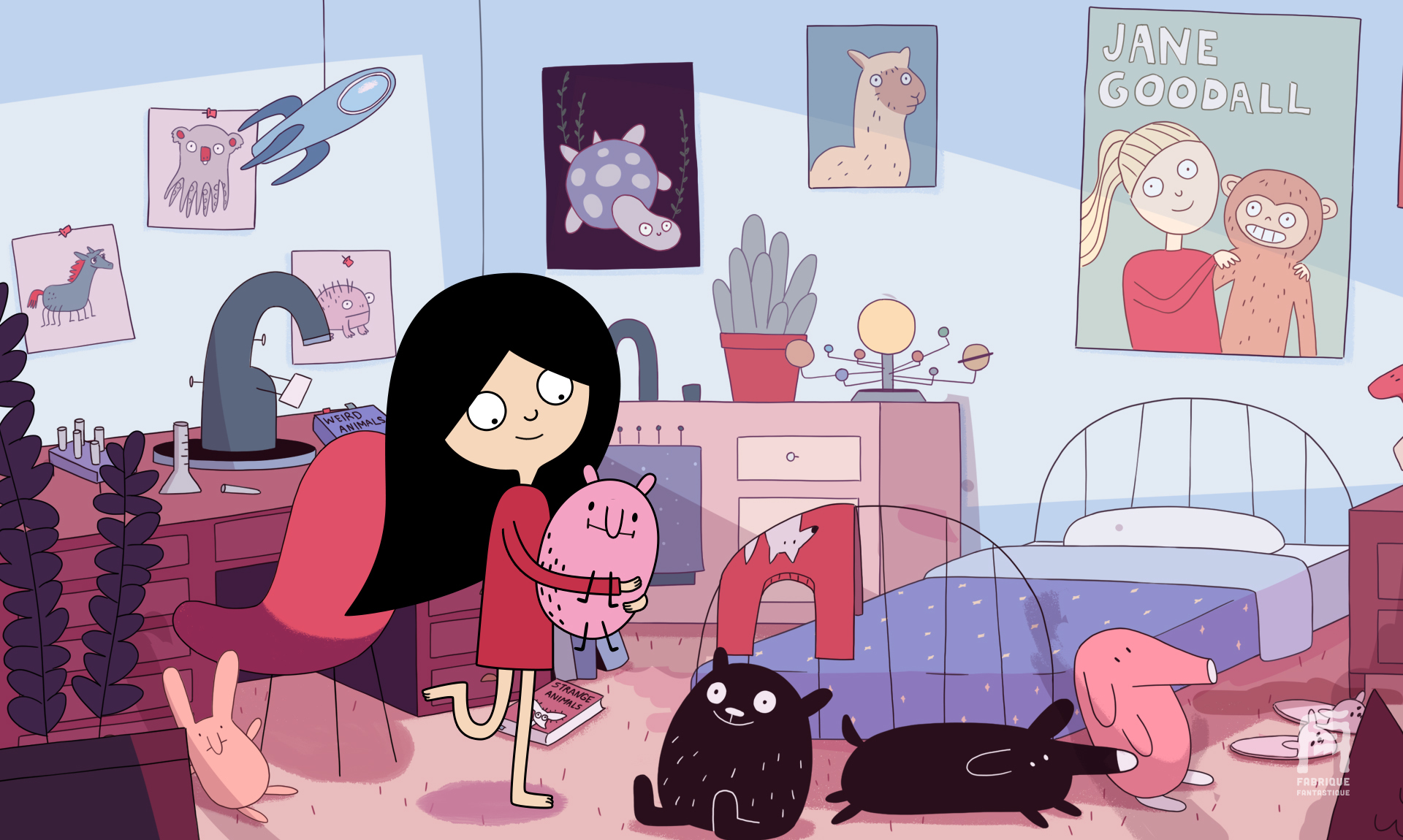
In Flanders, major studios such as Creative Conspiracy (Ninja Express) and La Fabrique Fantastique (Interstellar Ella) have both been working with Ketnet for a long time, building strong partnerships with Ketnet veteran and Content Manager Telidja Klai. While on the French-speaking side, Paola Acosta(Responsable Fictions Animation) works closely with Panique, Dreamwall and many other Belgian studios for series, shorts and animated features backed by RTBF. Sure, the budgets are small, but the spirit is there, and so are the talents.
Read the complete article in the EAJ Fall Issue, pages 72 -75.