The story comes full circle. In 1962, Shanghai Animation Film Studio won the Annecy International Animated Film Festival’s Children’s Film Award with Tadpoles Looking for Mother, widely recognized as the world’s first ink-wash animated film. More than six decades later, the same studio returns to the festival’s main stage with Nobody, one of two Chinese titles competing in Annecy’s feature-film lineup. Yet the link between the two films goes beyond the studio’s presence in France.
While Tadpoles Looking for Mother pioneered the use of ink-wash aesthetics in animation, Nobody reinterprets that artistic tradition for a new era. Produced over four years by a team of around 600 artists and technicians, the film comprises 1,800 shots and more than 2,000 scenes, illustrating how a visual style once associated with handcrafted experimentation can now support large-scale feature production.
Annecy artistic director Marcel Jean recently pointed to the rapid evolution of Asian animation industries, highlighting China in particular. According to Jean, Chinese creators have increasingly focused on relatable storytelling while expanding the markets they aim to reach. That shift is clearly visible in this year’s selection.
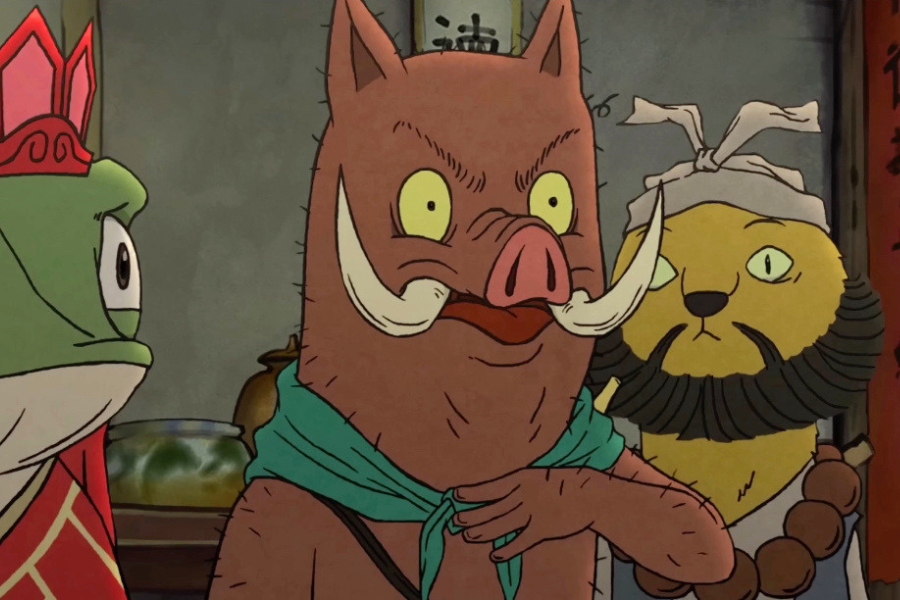
Among the contenders, Nobody (Langlang Shan Xiao Yaoguai, or The Little Monsters of Langlang Mountain) stands out as one of the most anticipated films in competition. Produced by Shanghai Animation Film Studio and Shanghai Film Infinity, the feature is a spin-off of the acclaimed anthology series Yao-Chinese Folktales.
The film follows a banished wild-pig spirit and his companions (a toad, a weasel, and a gorilla) on a fantasy journey inspired by Journey to the West, one of the great classics of Chinese literature. Its domestic success has already been remarkable. Released in China in August 2025, the film earned 1.72 billion yuan (approximately $252 million) at the box office, becoming the most successful 2D animated feature ever released in the country.
Part of its appeal comes from its balance between familiarity and innovation. While visually adventurous, Nobody remains deeply rooted in Chinese folklore. Audiences are offered something recognizably local, yet packaged through contemporary animation language and genre storytelling.
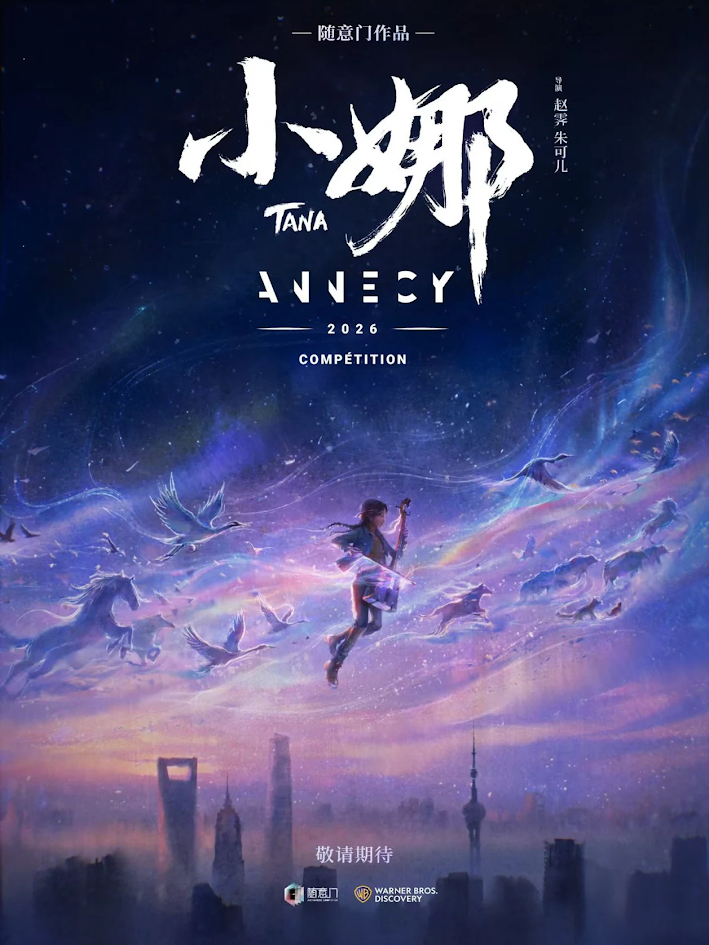
The second Chinese title selected in the same category, Tana, points in a similar direction. Directed by Ji Zhao and Ke Er Zhu, the film follows a musician who returns to her native Inner Mongolia after being told in Shanghai that her music lacks a “soul”. Along the way, she encounters a mystical fiddle fairy and gradually reconnects with her homeland, memories, and cultural roots.
Like Nobody, Tana builds its narrative around a journey. Yet instead of a fantasy spectacle, the film places music, oral traditions, and regional identity at its center. Folk culture once again becomes the driving force of the story. Taken together, the two selections suggest an interesting trend.
Rather than relying exclusively on large-scale fantasy franchises, some of China’s most visible animated productions are investing in regionally grounded stories, local traditions, and distinct cultural identities. These films are highly specific in their settings and references, but that specificity may also be their greatest strength. In an increasingly crowded global animation market, authenticity can travel surprisingly well.
Competition at Annecy, however, remains fierce. European productions continue to dominate the festival’s feature lineup, historically enjoying both critical attention and awards recognition. Yet China’s presence has steadily grown in recent years, with titles such as Jiang Ziya, Art College 1994, The Storm, and Into the Mortal World all earning places in past official selections. In 2026, this growing presence may finally translate into genuine contention for the festival’s top prize.