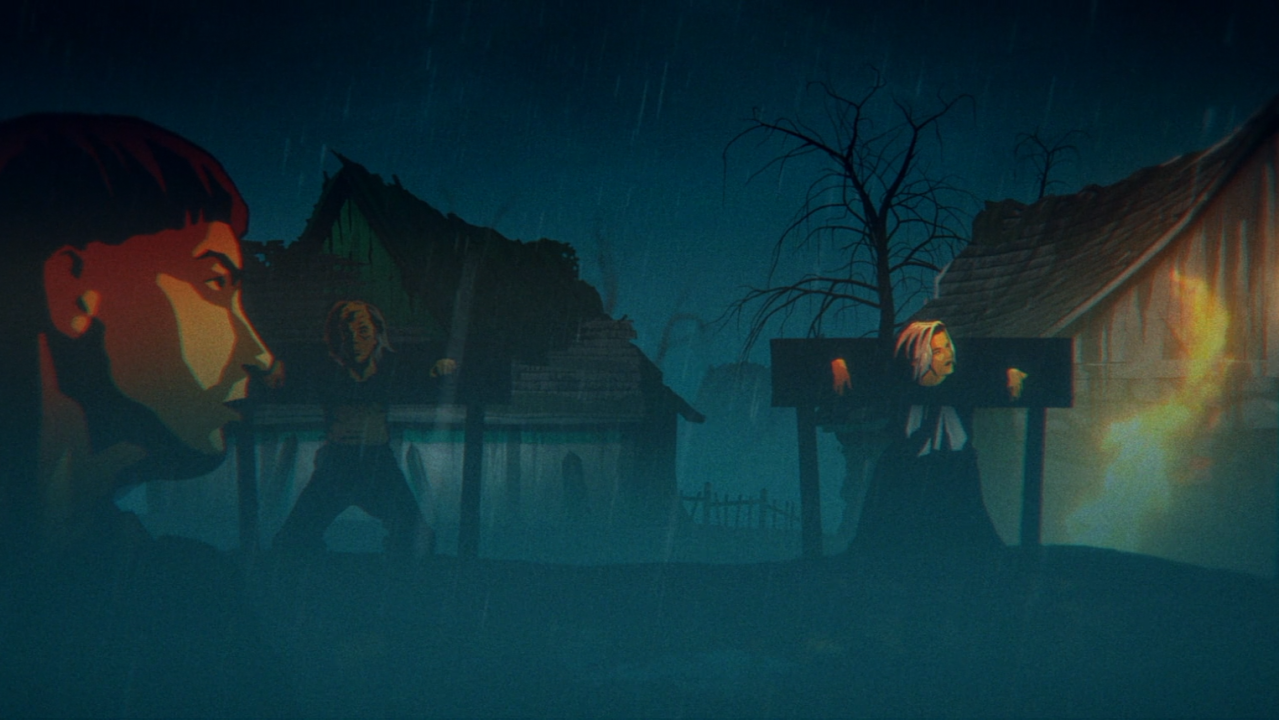
At the forefront of this movement is Dog of God, a rotoscoped fantasy animation that demonstrates how European funding supports ambitious experimental projects with great storytelling.
Directed and written by Latvian filmmaker brothers Lauris Ābele and Raitis Ābele, the film is produced by Raitis Ābele and Kristele Pudāne of Tritone-Studio, alongside Giovanni Labadessa of Lumiere Lab. The movie is receiving strong international attention, with several distributors on board in different territories, including Cartuna in the United States, ESC FILMS in France, Little Dream Pictures GmbH/Brave New Work in Germany, and Weird Wave/ VIDEORAMA in Greece, while Baltic releases are handled by Spektrs.
The Animation Journal met Raitis and Lauris Ābele in Berlin during the recent European Film Awards, and we are happy to share their insights with our readers about the importance of being innovative in today’s audiovisual industry.
Technical Approach and Production Methodology

Dog of God employs rotoscoping—a technique with deep roots in animation history, notably used in Ralph Bakshi’s work during the 1970s and 80s. The production process reflects modern realities: the film started as a live-action concept but switched to animation when budget constraints made elaborate historical settings too expensive.
The technical pipeline was intentionally unconventional. Live-action footage was shot against a blue screen and then sent to a team of students working remotely across different software platforms. Instead of enforcing strict technical standards, the production focused on final output quality, with artists submitting PNG sequences regardless of the tools they used. Backgrounds were created using Blender as reference blueprints, while strategic shortcuts—such as silhouette techniques for background characters—helped keep the rotoscoping workload manageable.
Funding Model
Classified as “experimental” by European funding bodies, Dog of God benefited from cultural support structures that don’t require mass-market appeal for viability. This designation allowed the creators to pursue their artistic vision without commercial compromise.
The project’s success—including its Tribeca premiere and European Film Awards nomination—exceeded initial expectations considerably, validating the European model’s capacity to nurture boundary-pushing content.
Distribution Strategy and Audience Development
Following its festival premiere, the film found its natural audience on the genre festival circuit. Beginning in April, theatrical distribution expands to the United States, France, Germany, and Greece, likely targeting late-night programming slots suited to its adult orientation.
Audience reception patterns reveal interesting cultural variations: domestic Latvian viewers tend toward serious historical interpretation, while Anglo-American audiences often discover humor in unexpected moments, suggesting the work’s thematic richness supports multiple readings.

Industry Implications
Dog of God represents a rare specimen in contemporary animation: adult-oriented fantasy and horror executed through rotoscope techniques. The production demonstrates that experimental animation can achieve both critical recognition and audience engagement when supported by appropriate funding mechanisms and realistic commercial expectations.
For animation professionals, the project offers several takeaways: the viability of hybrid remote/distributed workflows, the continued relevance of classical animation techniques when applied with contemporary sensibility, and evidence that European cultural funding can successfully nurture projects that occupy the space between pure art film and commercial entertainment.
As Lauris and Raitis move forward with both live-action work and another animation project—a dark adaptation of Orpheus myths exploring art under oppression—their trajectory suggests that European animation’s experimental wing remains fertile ground for professionals willing to work within its distinctive production and funding frameworks.