In an animation landscape increasingly dominated by franchise tentpoles and formulaic narratives, The Little Amelie emerges as a sophisticated case study in adaptation, emotional storytelling, and the persistent challenges facing European independent animation.
Based on Amélie Nothomb‘s autobiographical novel, Métaphysique des tubes (published in English as The Character of Rain) this French-Belgian co-production has garnered recognition at both the European Film Market – EFM and the Academy Awards, positioning itself as a significant entry in the international animation discourse.
Adaptation as Creative Restructuring
The film’s adaptation approach showcases expert narrative simplification for animation. As directors Liane-Cho Han Jin Kuang and Maïlys Vallade explained during the journalists’ roundtable at the recent EFM in Berlin, instead of a faithful page-to-screen translation, the creative team completely restructured Nothomb’s source material. The adaptation focuses on the relationship between young Amélie and her Japanese caregiver Nishio-san, turning the episodic memoir into a tight character study with a clear dramatic structure.
This restructuring involved strategic invention and omission. Scenes such as the Obon lantern celebration were created specifically to deepen the central relationship, while elements from the book—including Amélie’s linguistic development and certain traumatic sequences—were removed for narrative cohesion and international accessibility. The three-act structure follows classical dramatic form while preserving what the directors describe as a child’s chaotic perception, where emotional states directly influence visual scale and environmental presentation.
Visual Language and Theory
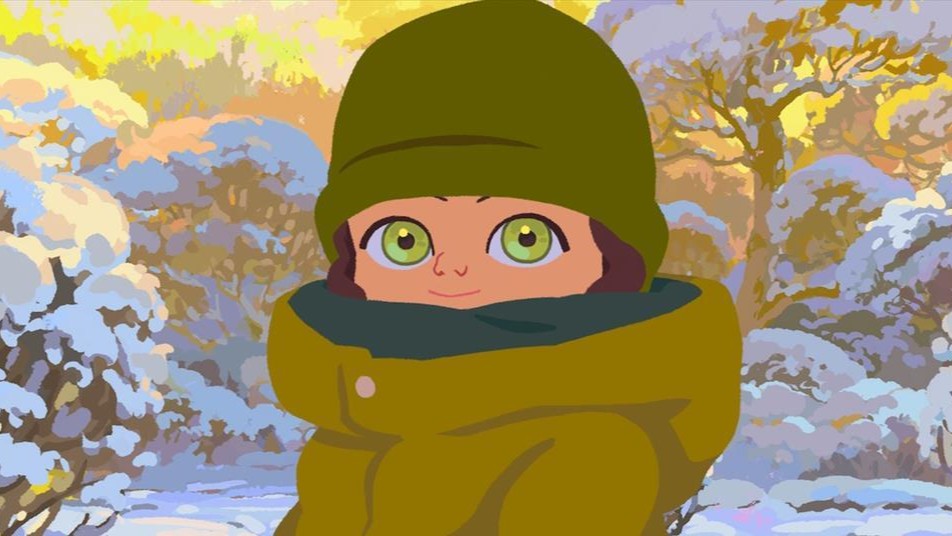
The film’s visual design marks a major technical achievement. The production was split into several thematic sequences, each guided by specific color choices that follow Amélie’s emotional journey. The progression shifts from the bright, saturated hues of early childhood exploration to autumnal desaturation during moments of grief, ending in winter’s renewal—a seasonal metaphor implemented through strict color theory.
Character-specific color coding reinforces psychological associations: Kiyoshima-san’s purple conveys her cold authority, André’s red signals paternal distance, while Nishio-san’s yellow establishes her as Amélie’s emotional sun. Artists Justin Thibault and Simon Dumonceau contributed specialized color scripts focusing on botanical elements and low-light sequences, respectively, demonstrating the production’s commitment to tonal consistency across all visual layers.
Thematic Architecture and Intended Impact
The film tackles significant themes like death, cultural displacement, identity, and acceptance while staying accessible to viewers aged 5 and up. The directors clearly communicate a main, life-affirming message: promoting openness, embracing impermanence, and recognizing that life remains valuable despite its unavoidable challenges. This choice intentionally moves away from Nothomb’s darker ending, presenting the work as inspiring rather than just observational.
The thematic depth has sparked varied audience reactions. Early childhood professionals and pediatricians have observed a strong connection to the film’s treatment of grief and loss, while children often display engagement that surpasses that of adult viewers—a phenomenon the directors attribute to younger audiences’ willingness to accept emotional complexity when it is presented straightforwardly.

Distribution Challenges and Market Positioning
Despite its critical acclaim—including an EFM nomination, Golden Globe consideration, and honors at the Los Angeles Film Festival—The Little Amelie highlights the ongoing commercial struggles faced by European independent animation.
International distribution strategies have differed significantly by region. While France primarily marketed the film to children, markets such as the United States and Spain targeted adults with children—a demographic approach that allowed for category flexibility, as evidenced by the film’s inclusion in live-action competitions at San Sebastián. This strategic ambiguity highlights ongoing debates about animation’s role and its continued segregation in certain markets.
The directors note that social media and influencer engagement, especially in Italy, have provided essential grassroots support. The growing interest from South Korea and the United States suggests that the film’s universal themes may transcend the cultural specifics that sometimes limit European animation’s international success. However, the competitive landscape remains tough: European productions often struggle for visibility against well-funded studio blockbusters, and animation’s reputation as solely children’s content in markets like France restricts both funding and audience growth.
Industry Implications and Future Outlook
The Little Amelie’s journey offers valuable lessons for animation professionals. First, the film shows that complex themes and appeal for all ages are not mutually exclusive when backed by careful craft and emotional authenticity. The production’s dedication to visual storytelling through color theory, character psychology, and technical skill sets a standard for narrative-driven independent animation.
Second, the work’s journey to recognition—from festival circuits to Oscar consideration—confirms the global demand for animation that breaks away from formulaic methods. The film’s success in engaging both industry gatekeepers and diverse audiences shows market potential for projects that prioritize artistic vision over demographic targets.
Finally, the distribution challenges highlight systemic problems within European animation infrastructure. The gap between critical praise and commercial success shows insufficient marketing resources, prejudices that restrict adult audiences, and structural disadvantages faced by independent productions in a growingly consolidated market. These issues need solutions across the industry: better funding options, strategic marketing partnerships, and ongoing efforts to elevate animation’s recognition as a versatile medium that explores complex themes for all age groups.
As the film continues to be released worldwide, its reception will provide valuable insight into audience interest in animation that engages viewers—regardless of age—in complex narratives and emotional depth.