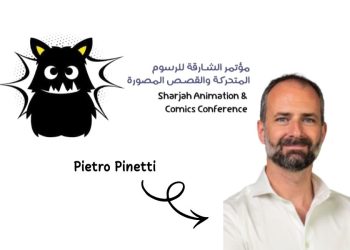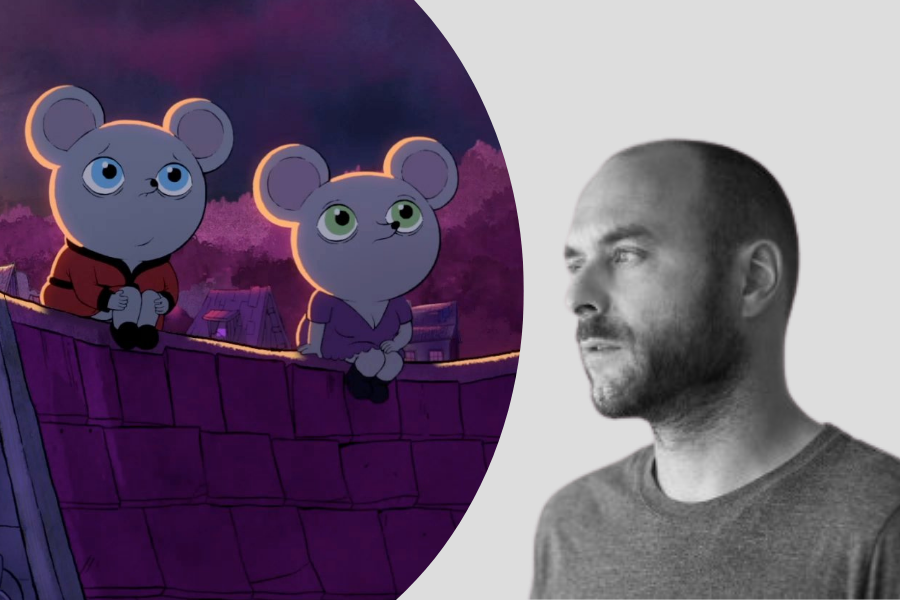
Alberto Vázquez Rico (b. 1980) is a Galician filmmaker, illustrator, and comic-book artist, and he has spent over a decade quietly crafting one of European animation’s most unique voices. His latest feature, Decorado — a dystopian fable with anthropomorphic animals — swept the Quirino Animation Awards top prize for Best Animated Feature. We met him in Tenerife, right before this special award to learn more about his movie, and next plans.
Your work constantly returns to existential themes — and always through animals. Why?
“I have always worked with anthropomorphic animals. I actually come from the world of comics, and that idea was there from the very beginning. The reason is simple: animals are universal. Everyone knows who a mouse is, who a rabbit is, and who a frog is. They belong to no single place or time; they are part of every culture at once.
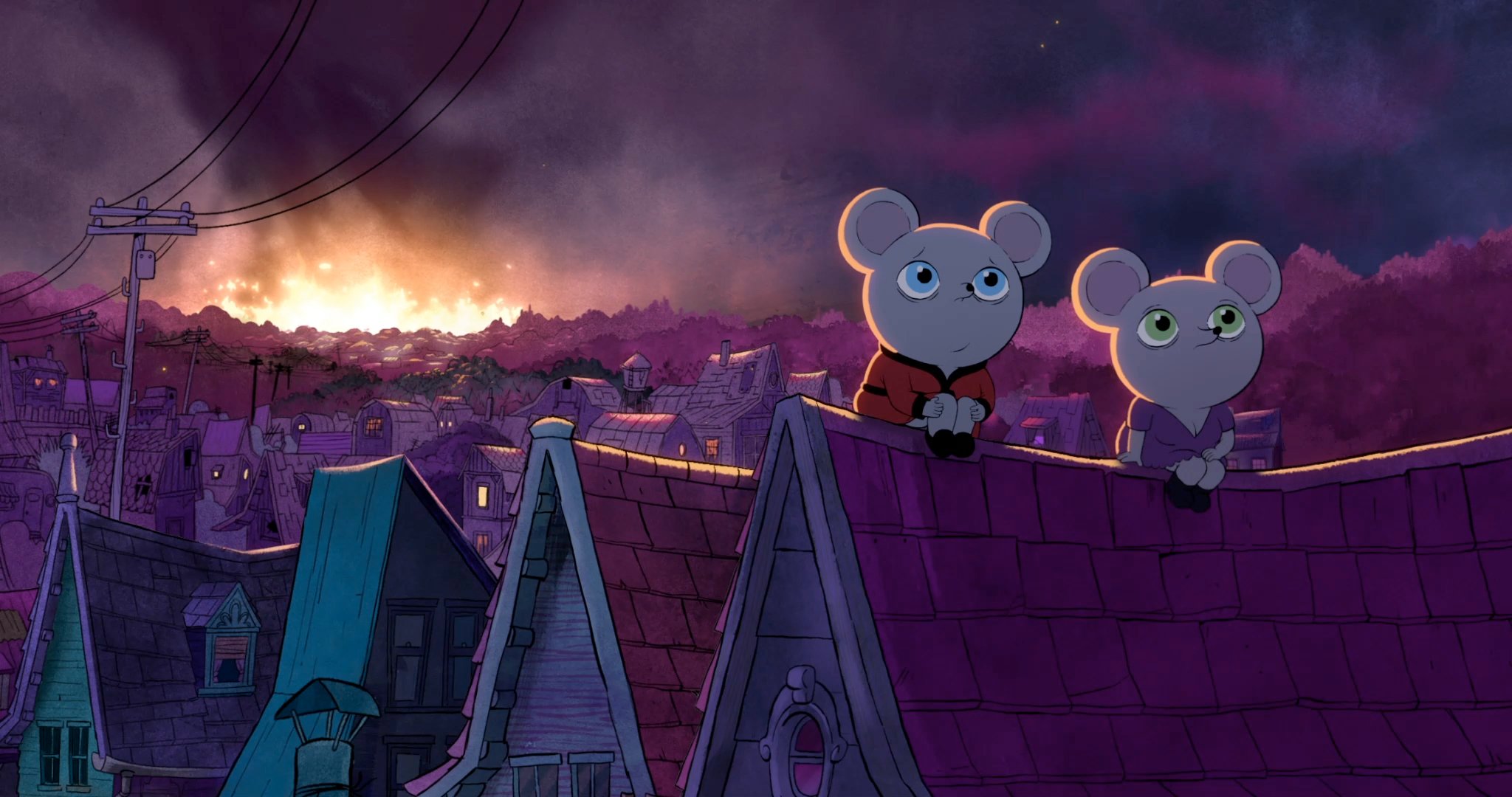
When you watch Decorado, you cannot tell where it is set. You do not know if it is a Spanish, French, or Japanese film. That universality matters to me. I also enjoy taking the legacy of classic Disney — the earliest, most elemental Disney — and turning it inside out. I use it to explore social themes and the darker side of human nature. The contrast between the warm, familiar aesthetic and the dark content creates a tension that is very much the point.”
How has the public responded to finding something so unsettling dressed up in such inviting imagery?
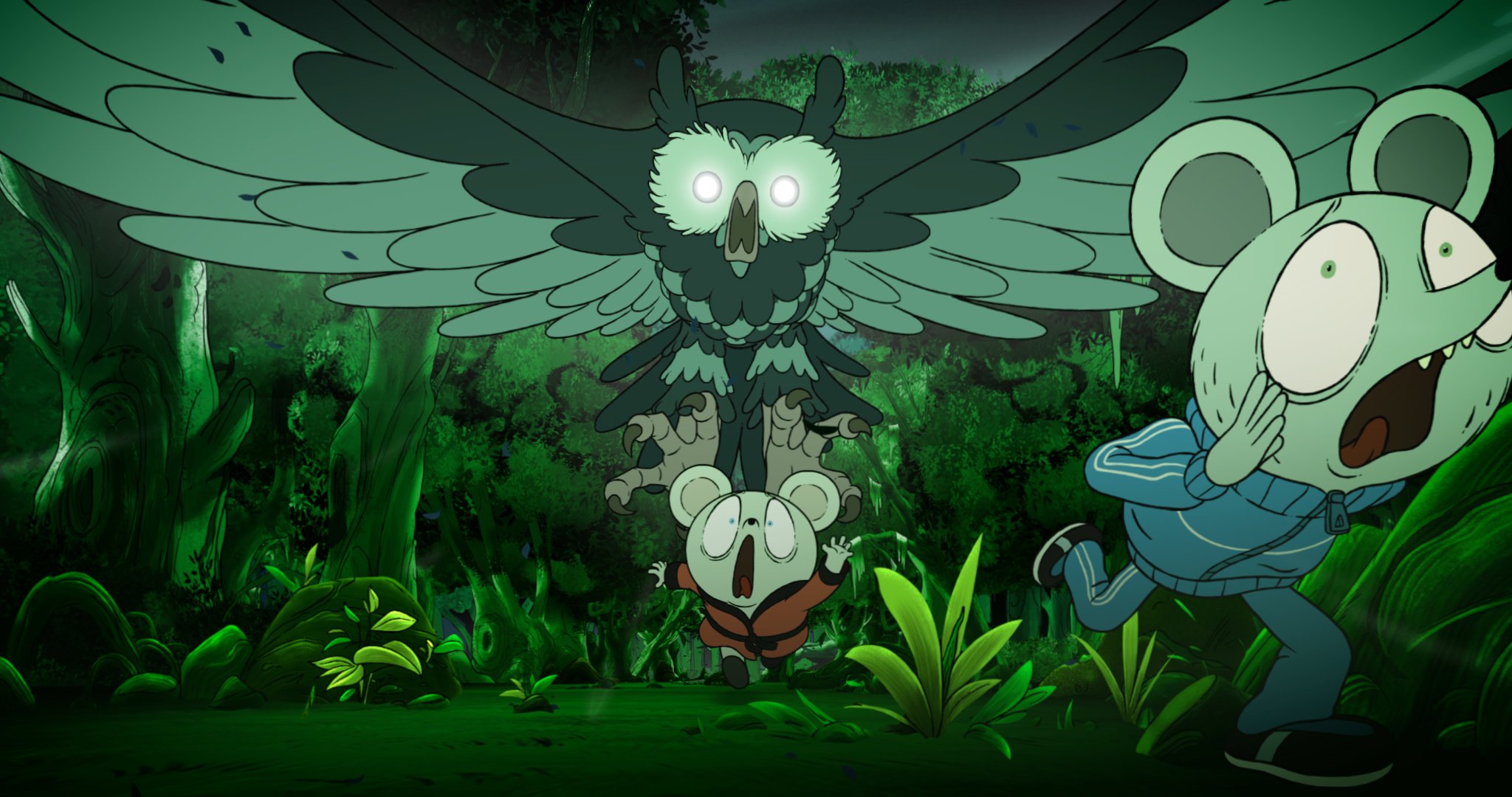
“People who know my work already know what to expect. But many teenagers, children, and general audiences come in expecting something cozy and familiar. They end up face to face with a film that is hard, one that talks about present-day crises: health, economic, existential, and mega-corporations controlling our lives. That collision creates a very interesting impact on the viewer. I am genuinely pleased with it.”
What message do you most want audiences to remember after watching Decorado?
“For me, the film is a fable about the meaning of life and human freedom — told with little animals. I wanted to show that the only thing that can save us in a troubled world full of superficial relationships is real connection: love, friendship, genuine bonds. When the world is full of conflict, love is what can save you. That is what I wanted to leave with people.”
How would you describe the current challenges and progress in animation production in Spain and Ibero-America?
“Since I started working in animation, things have improved a lot. Back then, two or three Spanish animated features were made per year. Now it is closer to eight. Short-film production has almost tripled. But there are still serious problems with financing and, above all, with distribution. Decorado has been distributed in only thirty-five cinemas across Spain. That says a lot.
The real issue is not cultural — animation interests people, adult animation interests people. We have The Simpsons, Family Guy, and BoJack Horseman. The problem is that cinema owners and distributors are simply not used to betting on this kind of film. France is the best country for animation in Europe, without question: far more production, far more co-productions, far greater variety, far more schools. Spain, Italy, Portugal, and Latin America are still catching up.”
Do you believe Ibero-American animation prioritizes artistic ambition over commercial appeal compared to other regions?
“You have to distinguish between short films and features. In short films, there is enormous freedom; that is where you see a real variety of themes, techniques, and approaches. Features are more complicated because so few are made, and commercial interests are always bigger. Almost everything at feature length is family entertainment. A true adult animated feature? Once a year, if that. Short films are another world — more authorial, more experimental, more daring. I have always said that the short film is the natural home of animation. That is where you see the best the medium can do.”
Can you elaborate on the specific influences that shaped Decorado?
“For me, Decorado is a blend of three things: the most classic Disney, the great dystopian literature — 1984, Brave New World — plus films like The Truman Show and The Prisoner. Then there is a dark, peculiar humor I associate with Luis Buñuel. Mix those ingredients together, and you get this film — a picture that makes many viewers deeply uncomfortable, but one we are very happy to have made.”
How did your early comic-book work evolve into the feature film Decorado?
“The process has been long. It began around 2012–2013 with short comics—brief stories published in magazines. By 2017, I had made a short film called Decorado. Next, I tried to develop an adult animated series based on the same world, but it never got off the ground. Since we had already written episodes, characters, and storylines, I decided to gather all that material and turn it into a feature. So, this story is twelve years old. That is the timescale of animation.”
Having completed three features and five shorts, what is your next creative direction?
“Right now, I genuinely do not know. After years spent chaining projects together, I moved from shorts to features without a break. Sometimes, you must stop and ask what you actually want to do next, or even if you want to continue making animated films at all. First and foremost, I am a draughtsman; as such, I can make comics and do illustration. At present, I am working on posters and book covers. In time, the next step will reveal itself.”