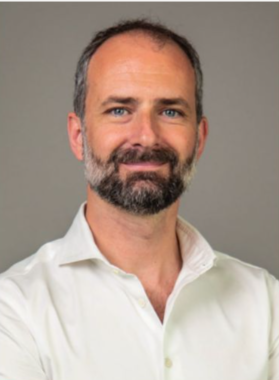
Pietro Pinetti, Artistic Director of Sharjah Animation and Comics Conference (SACC) 2026, on building bridges between the MENA region and the global industry, and on the future of animation.
Now in its fourth edition, what role does SACC play on the international animation scene?
SACC is a meeting point that invites the animation industry to look beyond its usual reference points. Coming to Sharjah means encountering different cultures, audiences and ways of working, and questioning our assumptions about the stories we tell and how we tell them. Innovation does not come from technology alone; it also comes from unfamiliar ideas, creative traditions and production models. Here, these encounters happen naturally, opening the door to collaborations that might not emerge within more established circuits, and strengthening the connections between the MENA region and the global industry.
A bridge between Asia, Africa and Europe: how much potential does the MENA region have to fulfil this role in practice?
The potential is significant, but geography alone does not make a bridge. You also need education, production
infrastructure, investment and lasting relationships. The Sharjah Book Authority deserves particular recognition here: its work in publishing and culture provides a strong foundation for connecting storytelling across disciplines, especially books, comics and animation. The region has stories and creative voices that can travel internationally without losing what makes them distinctive, but turning them into sustainable projects requires development, financing and production partners. The real measure of success is not how many people meet in Sharjah, but what they go on to create together.
Your programme connects the MENA region with Japan, India, South Korea and beyond. Could you tell us more?
It is built around a simple idea: there is no single way to make animation. This year we welcome Douglas Sweetland and Andrew Gordon, whose experience at Pixar offers insight into storytelling, character and performance; Shuzo Shiota of Polygon Pictures, with decades of work in Japanese animation; Ashish Thapar, on adapting Indian mythology for an international audience in Kurukshetra; Park Chang-ha, on animation and webtoons; and Usman Riaz, who built an original hand-drawn animation practice in Pakistan with The Glassworker and Mano Animation Studios. Arab, African and European creators and educators join them. What interests me is the dialogue between these experiences. How can a culturally specific story find a global audience without losing Its identity? What can an emerging studio learn from an established production? That is what turns a showcase into a genuine exchange of knowledge.
Beyond the professional sessions, there are exhibitions and much more. How do you combine the B2B and B2C sides of animation?
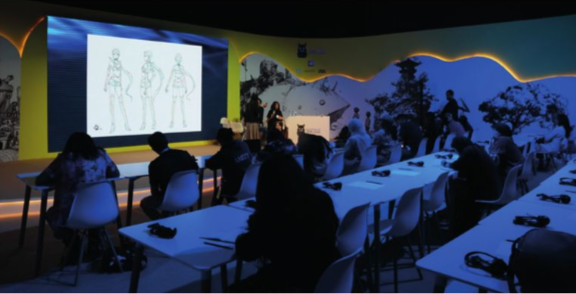
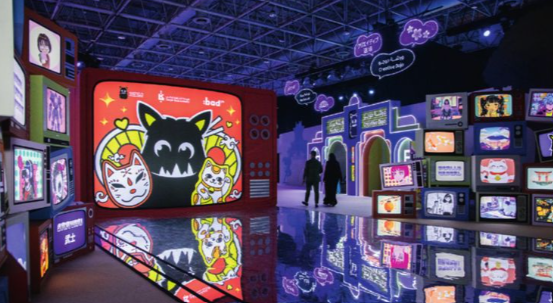
They are part of the same ecosystem. The industry needs people who develop and finance projects, but also audiences who care about the stories and the craft behind them. At SACC, professional sessions sit alongside screenings, exhibitions, workshops and live experiences. Music makes this connection especially tangible: with the Florence Pops Orchestra, we show live how music works with animated images, revealing how closely sound, timing and movement depend on one another. For the public, it is an engaging experience; for students and professionals, a practical lesson in collaboration.
How do you see the near future of animation in Europe and the MENA region?
Europe has a strong, diverse tradition, backed by experienced studios, schools and public funding. The challenge is to preserve that diversity while building sustainable businesses in an increasingly international market. The MENA region has a talented new generation; the priority is to turn that energy into lasting production capacity, through partnerships that allow regional talent to develop its own identity rather than adapt to external expectations. Artificial intelligence is already raising questions about workflows, authorship and the value of creative work, which we must approach with curiosity and critical judgement. But the fundamentals remain the same: a compelling story, strong artistic direction and skilled people. The future belongs to those who can combine them with the ability to collaborate across borders.