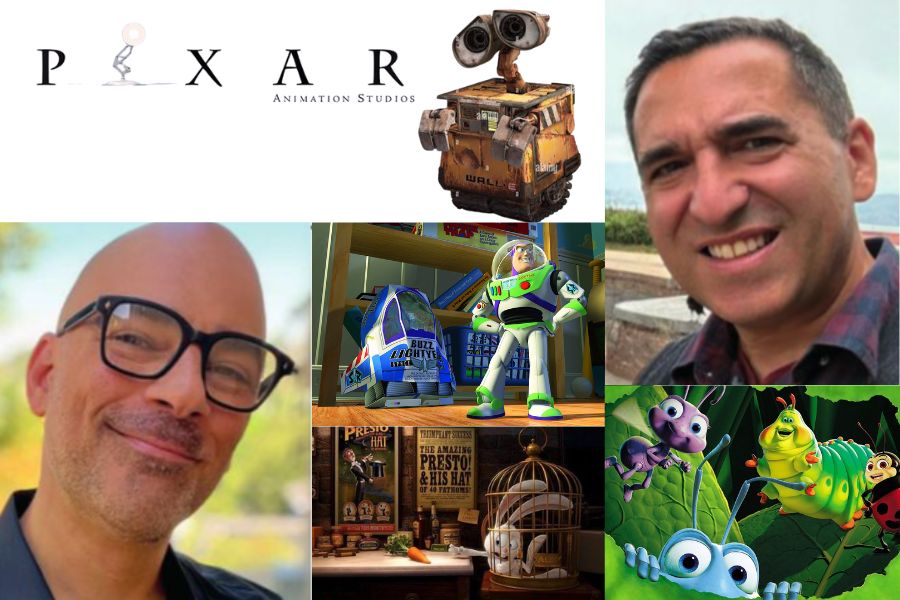
Douglas Sweetland and Andrew Gordon joined Pixar in its formative years, the former as an animator on Toy Story, the latter on A Bug’s Life, when computer animation was still writing its own rules and the studio was redefining what an animated feature could be.
Three decades on, they look back at the craft and storytelling that shaped them and consider how technology may reshape the medium.
What was it like to be at Pixar in those early years?
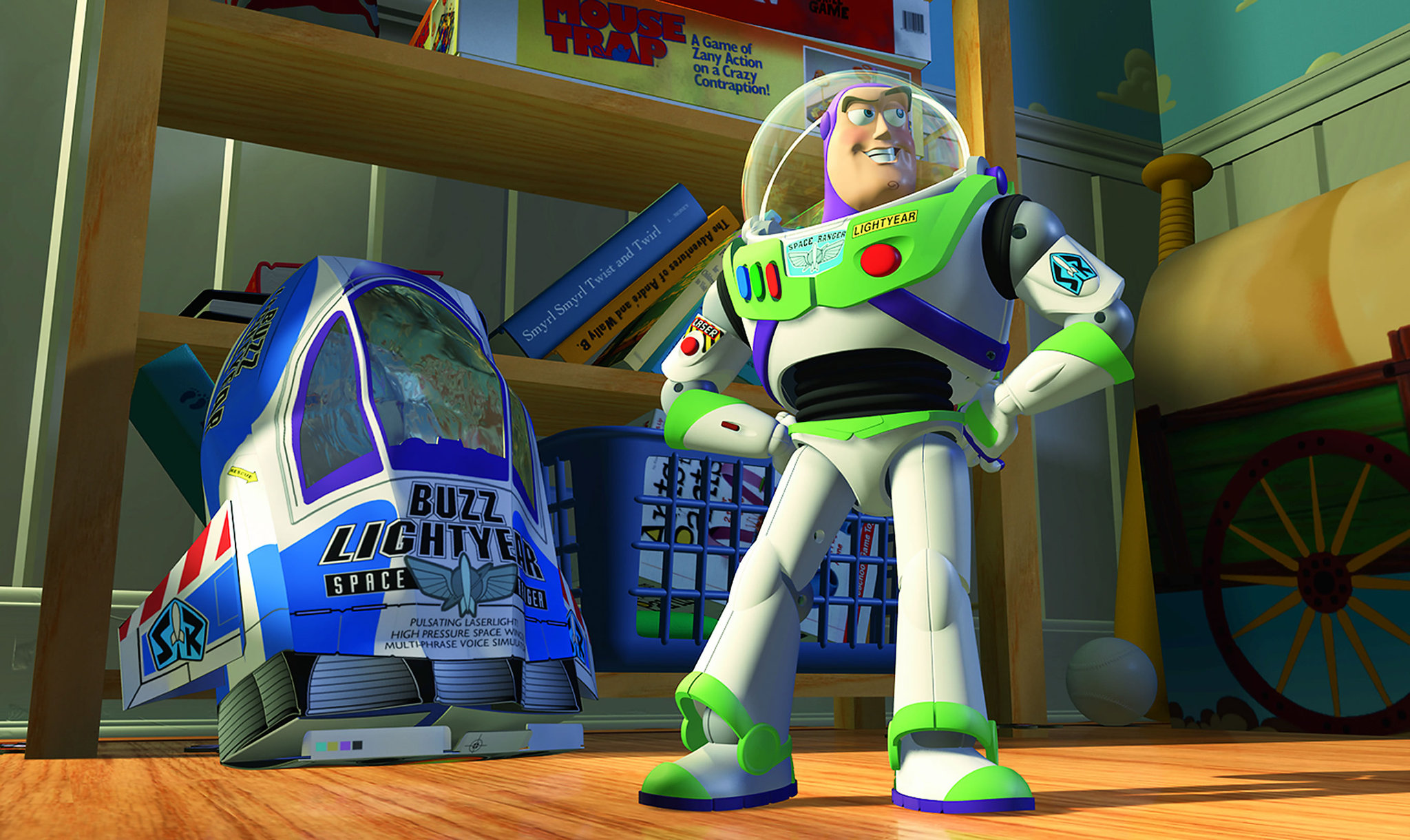
Douglas Sweetland: “It was amazing to be at a company like Pixar, so focused on craft and on what’s best for the film, so early in its history. So much was yet to be defined, and leadership looked to us to bring our best work and make the film better-plussing was simply the studio’s assumed philosophy. It was a new medium, so the playing field was very level. Only a handful of animators, mostly in leadership, had any CG experience, and we picked up tricks of the trade as they were being discovered. On Toy Story especially, an animator’s work would often reset the bar in dailies, showing a gesture or technique the rest of us would use for our whole careers. It was an incredible time of discovery.”
Andrew Gordon: “When I arrived from Warner Bros., Pixar was already a legendary place: they had done Toy Story – I started on the next film, A Bug’s Life, and they were known as the best in computer-animated storytelling, determined to do things differently both in technology and in the kinds of stories they told. At the time animation was all about the classic Disney model, happy villages and songs, basically musicals, while Pixar wanted to make it serious, with acting, stakes, characters and real drama.
We tend to forget that a lot of animated movies back then lacked that kind of drama, which the old Disney films had and which somewhere along the way got lost.
On the technology side, Pixar had proprietary software that was more powerful than the off-the-shelf packages in how you collaborated and checked shots in and out, and the whole place felt like lightning in a bottle, with people excited to be there and exciting work to do.”

How has the creative process changed since Toy Story, and what principles have remained the same?
Douglas Sweetland: “In my opinion the principles are the same, and the goal is still to get the audience to forget they’re looking at a computer puppet. What has changed is the method, because animation interfaces have evolved enormously: it’s been a while since I animated, and from what I understand they’re far more intuitive today, letting animators handle characters almost like physical objects, while in my day we reached them through grids and graphs.”
Andrew Gordon: “It’s changed a lot – you still start with a script, go into development and try to figure out what the movie is about, and sometimes people never get all the way there. What hasn’t changed are the principles behind a good story and a good character, an understanding of what audiences want to see now, and the drive to try new things instead of the same old tricks. On Toy Story things were slower, while today so much happens in real time thanks to better tools, better software and faster computers, and at the same time the stories people want to see have become more complex.”
What makes a great animator today, and which skills will matter for the next generation?
Douglas Sweetland: “The qualities that make a great animator are much the same: you have to deliver a performance that is convincing, surprising and true, and that takes a mix of technique, the part that evolves with technology, and theatrical chops, which haven’t really changed for centuries. Personally, I’d invest in those skills, studying story, character and performance, taking acting classes, improv, even stand-up, and honing your observational skills on performance in movies, theatre, pantomime and, most importantly, life. Life is drama: study it, and if it’s not a drama, start living it!
Writing and directing classes are also a smart choice, because the more you know about the mechanics of the story your work lives in, the better you can serve that story and the needs of the show’s leadership.”
Andrew Gordon: “A great animator understands the underlying principles of animation and is also a fine actor, with a sense of timing, clear choices and taste, someone who knows what’s funny and where to poke fun, just as the best writers understand conflict and intention and know how to push on a character. Then you need to know how to make films. Unless you only want to be an animator, the future may ask you to know much more about everything, from filmmaking to every tool in the pipeline and the Al tools now coming online, while the first skills to learn are still the ones that make you a great storyteller.”
New technologies are changing how animation is made. Where do you see the biggest opportunities, and where should the creative process remain firmly human?
Douglas Sweetland: “Firmly human whatever could that mean? First, shouldn’t every discussion of Al start with a prayer? Ethical sourcing, environmental balance and no singularity, please and thanks, amen. Do you hear us, powers that be? Where my governments at? Personally, I see Al as a giant calculator that might save the individual artist a lot of long division, a tool that lets the writer, animator or director offload enough prohibitively time-consuming work to make masterworks on a timeframe and with a crew size closer to those of other, more independent art forms. What if an animator could write and animate a scene the way a musician writes and plays a song, or the way John Cassavetes shot a feature? Sadly, within studios it will be used to cut crews and costs and keep making the same commercially safe films, so to me the only silver lining is independent animators is that you? – taking their hard-won skills as writers, animators and directors and using Al to make daring animated films that, long overdue, free us from this narrow definition of what an animated movie can be.”
Andrew Gordon: “I always feel it should remain human, no matter what, with the human driving the tool, the story and the narrative, and I don’t particularly want to see things that are completely machine-made. I am interested in how films will be made: there’ll be hand-drawn animation, computer animation, Al-enhanced animation, stop motion, whatever it is, and you must look at it like a set of paints, where today I decide to paint with oils and tomorrow with something a little more technical. What will change is the pipeline, which might compact a little: where you had an animator, then someone lighting the shot, another person adding effects and someone rendering it, you might see one person handling three or more of those pieces. Even when you use Al to help you write or visualize something, it takes good taste, otherwise the result will look and sound like everything else, and the further we stay from that, the more room there is for original ideas.”
What kinds of stories do you think animation still has to explore?
Douglas Sweetland: “I love the renaissance we’ve had in adult animation, though how sad that we even have to call it that. Imagine “adult music”. Bizarre. It’s great to see genuinely mature animated work in the States, mostly on television, and what I’m looking forward to is similar work with a higher production value, because in features the oldest protagonist we get is, for the most part, a teenager. Also bizarre. With more and more indies creeping into the Best Animated Feature category, maybe the tide can turn towards more mature animated filmmaking with a premium look.”
Andrew Gordon: “The range of stories. The films that are bankable and big in the United States are still pretty much geared for kids, they’re family films, and I’m interested in seeing where animation can go if it’s treated the way Japan treats it with anime and manga, looking for a crossover that shes things so far that you no lon care whether it’s animated or live action, because it’s simply an incredible story. Project Hail Mary, released this year, is a great family film with two main characters, one CG and one human, and a little bit of puppetry, and I feel it’s pushing the boundaries of animation and storytelling. What makes me curious is how technology is opening up the playing field to different storytellers and to more things being made, in places where you might never have expected someone to tell a story like that: we’re used to a beginning, a middle and an end, and we’re going to see new ways of telling stories and new techniques.”