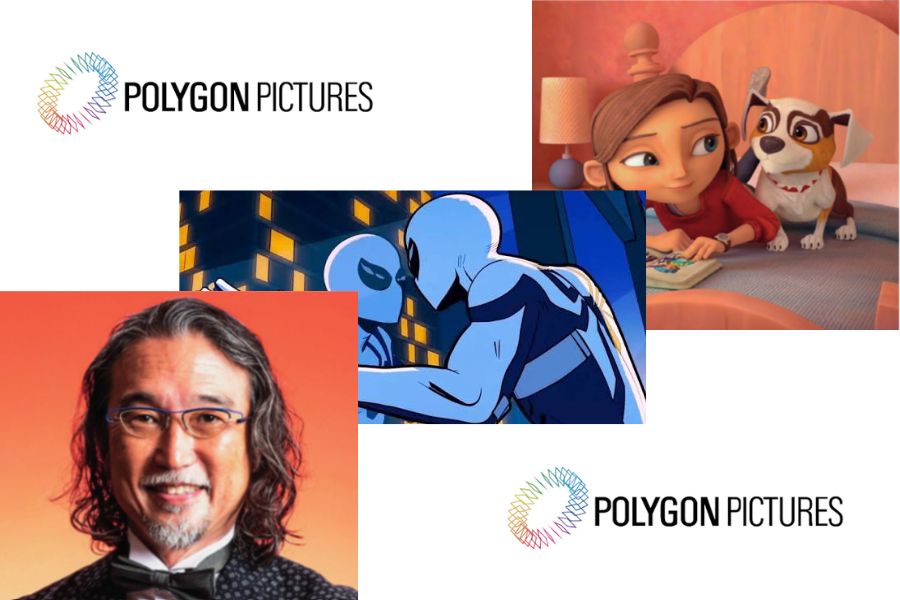
Over more than forty years, Polygon Pictures has navigated major changes in digital animation, from early experiments with computer graphics to work on international productions such as Transformers Prime, Star Wars Resistance and Knights of Sidonia. The studio’s history reflects how CGI has become an integral part of the animation industry, changing both what artists can create and how animation is produced.

Shuzo John Shiota, President and CEO of Polygon Pictures, will look back on this history during 40+ Years of Polygon Pictures, a session at the Sharjah Animation & Comics Conference on 23 October 2026. The discussion will explore the challenges of running an animation studio, from managing creative teams to balancing artistic ambitions, available resources and international partnerships.
Polygon Pictures was founded in Tokyo in 1983 by Toshifumi Kawahara, at a time when computer graphics required expensive technology and specialist expertise. Initially focused on researching and developing digital techniques, the studio found one of its first commercial applications in advertising. In 1995, the penguins Rocky and Hopper made their debut in a television commercial. Their popularity soon extended to merchandise, demonstrating the commercial potential of characters created entirely using computer graphics.
That success did not, however, spare Polygon the difficulties of working in an emerging field. In 1997, the studio joined Namco and Sony Computer Entertainment in establishing Dream Pictures Studio, a venture set up to develop a CGI feature film.
The film was never completed, highlighting the financial risks involved in digital productions of that scale. Shiota also helped establish the company before officially joining Polygon in 1999 and taking over as President and CEO in 2003.
Polygon went on to expand its work in television. In 2000, it produced Digital Tokoro-san, a CGI series with a simple, distinctive visual style. The project was also associated with the development of a production pipeline built around a division of labour. Making an episodic series meant maintaining visual consistency while coordinating the various stages of production within set schedules and budgets. Polygon remained active in feature films too, contributing to the opening sequence of Mamoru Oshil’s Ghost in the Shell 2: Innocence in 2004.
Alongside its work in television and film, Polygon became increasingly involved in international animated series. It contributed to productions including Star Wars: The Clone Wars, Transformers Prime and Tron: Uprising, bringing its CGI expertise to established fictional worlds with distinct visual styles. These series also earned industry recognition: The Clone Wars and Transformers Prime won Daytime Emmy Awards, while Tron: Uprising received two Annie Awards.
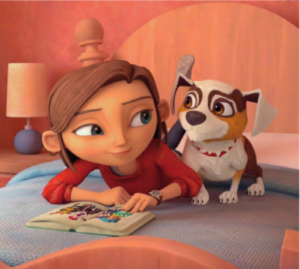
Later projects included Lost in Oz, whose Extended Adventure special won three Daytime Emmy Awards in 2017, and Star Wars Resistance, which was nominated for Primetime Emmy Awards in both 2019 and 2020. Beyond the awards, these collaborations reflect Polygon’s place in international television animation, working on everything from established franchises to original stories.
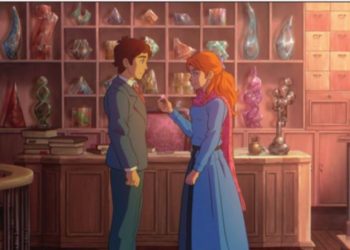
At the same time, the studio developed its work in Japanese animation, exploring how three-dimensional CGI could be used within a visual tradition closely associated with hand-drawn animation. In 2014, Polygon produced Knights of Sidonia, an adaptation of Tsutomu Nihel’s science-fiction manga that drew on the expressive qualities of anime while using computer-generated imagery. That same year, the studio provided the animation for Ronia the Robber’s Daughter, directed by Gorō Miyazaki, which later won an International Emmy Kids Award.
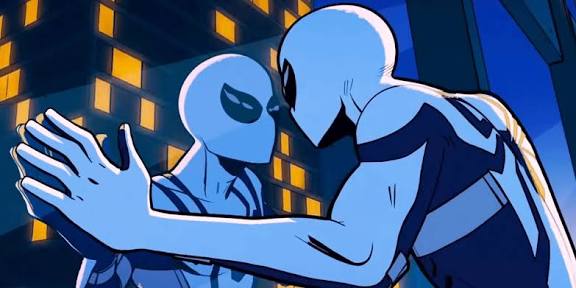
Ajin: Demi-Human and BLAME! followed, continuing Polygon’s work on adaptations of manga. More recent projects include Your Friendly Neighborhood Spider-Man and HYPNOSISMIC -Division Rap Battle- Movie. Polygon contributed to the latter, an interactive film in which audiences can influence the direction of the story by voting through an app. Here, technology plays a part not only in creating the images but also in shaping the audience’s experience, allowing viewers to take an active role in how the story unfolds.
Working on such a wide range of projects requires an extensive production operation, now involving teams in Japan, Malaysia and India. Bringing together people with different skills and working practices means more than assigning tasks and meeting deadlines. It also means creating the conditions for artists, technical staff and production managers to work together effectively. Creative decisions have implications for schedules and budgets, while production constraints can influence what is artistically possible. Balancing these demands is a fundamental part of running an animation studio.
This balance, and the people involved in achieving it, is what makes Shiota’s experience particularly relevant to the discussion in Sharjah. Looking back over more than forty years of Polygon Pictures offers an opportunity to consider not only how animation technology and production have changed, but also the decisions and responsibilities involved in creative work. The session will shed light on a side of the studio’s history that audiences rarely see on screen: the working relationships, collaboration and day-to-day choices that help bring animated projects to life.